First Official AIDS report published on this date
San Francisco General Hospital's Ward 5B became first AIDS care unit

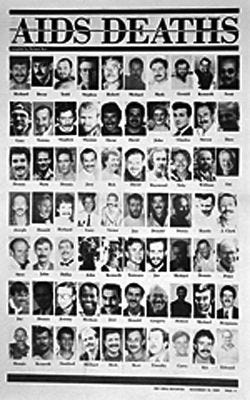
On June 5, 1981, the Centers for Disease Control published a brief report describing five young gay men in Los Angeles who had developed a rare pneumonia usually seen in people with severely weakened immune systems. Two had already died.
The report did not use the word AIDS. HIV had not yet been identified. But that short government notice became the first official warning of an epidemic that would transform medicine, politics, LGBTQ life, and San Francisco history.
Although the first report came from Los Angeles, San Francisco would soon become one of the most important cities in the AIDS crisis. The epidemic struck a community already shaped by gay liberation, Harvey Milk’s legacy, and the growing political power of the Castro. What followed was devastating: friends, lovers, artists, activists, and neighbors were lost in staggering numbers.
But San Francisco’s response also became a model for the world.

At San Francisco General Hospital, Ward 5B opened in 1983 as one of the first dedicated AIDS inpatient units. Its staff rejected fear and stigma, offering patients touch, dignity, and the recognition of partners and chosen families. Nearby, Ward 86 became a pioneering outpatient HIV clinic, helping shape treatment and care far beyond the Bay Area.
The city’s response was not only medical. It was deeply political and communal. The San Francisco AIDS Foundation, Shanti, and countless volunteers provided support when government action was slow and prejudice was widespread. Activists demanded research, funding, treatment access, and respect. In 1985, Cleve Jones helped conceive the AIDS Memorial Quilt in San Francisco, turning private grief into one of the most powerful public memorials in American history.
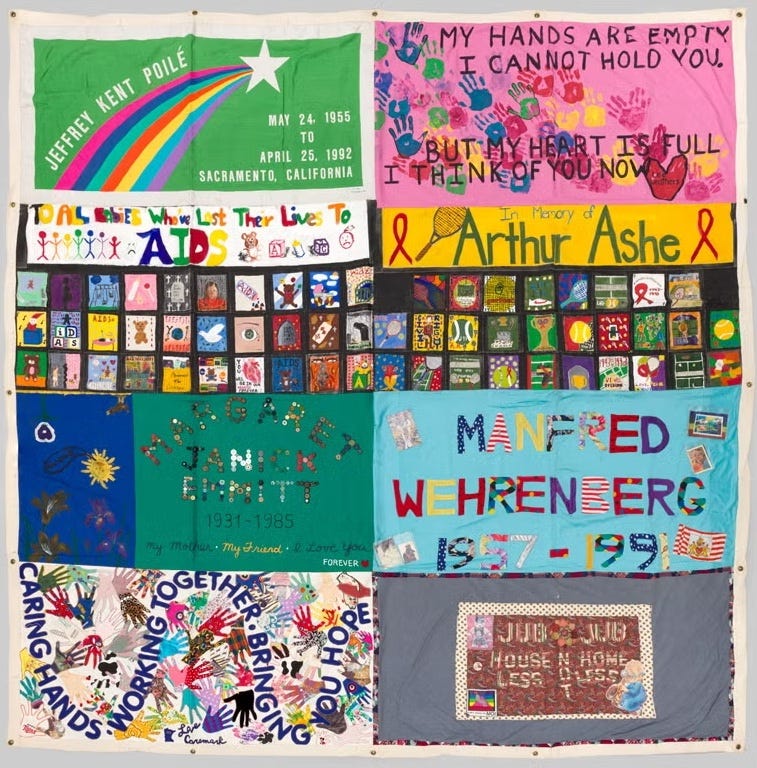
AIDS forced painful debates over sexuality, public health, and civil rights. But it also taught enduring lessons: public health works best when rooted in trust, compassion, and community leadership. San Francisco helped pioneer approaches that linked care, prevention, activism, and dignity.
Today, HIV is no longer the death sentence it once was for those with access to treatment. That progress came through science, but also through pressure from people who refused to be silent.
June 5, 1981, began with five cases in a federal bulletin. What followed was a generation of loss — and a movement that changed the world.
San Francisco’s role in that history remains profound. The city showed how a community could mourn, organize, fight, care for its own, and insist that every life lost be remembered not as a statistic, but as a name, a story, and a soul.
Damn... ward 86 ❤️😥